Supporting young people starts with meeting them where they are and providing them with holistic support. At The Bridge for Youth, we’ve seen firsthand how culturally relevant care impacts the young people we work with.
In 2025, 81% of youth supported identified as Black, Indigenous, or People of Color (BIPOC). As we work to be a safe and welcoming place for all youth, we acknowledge that each youth’s journey is unique; there is not a one-size-fits-all approach.
July is BIPOC Mental Health Awareness Month, a time to reflect on the unique challenges BIPOC individuals face in relation to their mental health. Hear directly from our staff and BFY youth on the barriers BIPOC youth face with their mental health, and how The Bridge’s holistic support empowers them.
Martrell, Mental Health Therapist
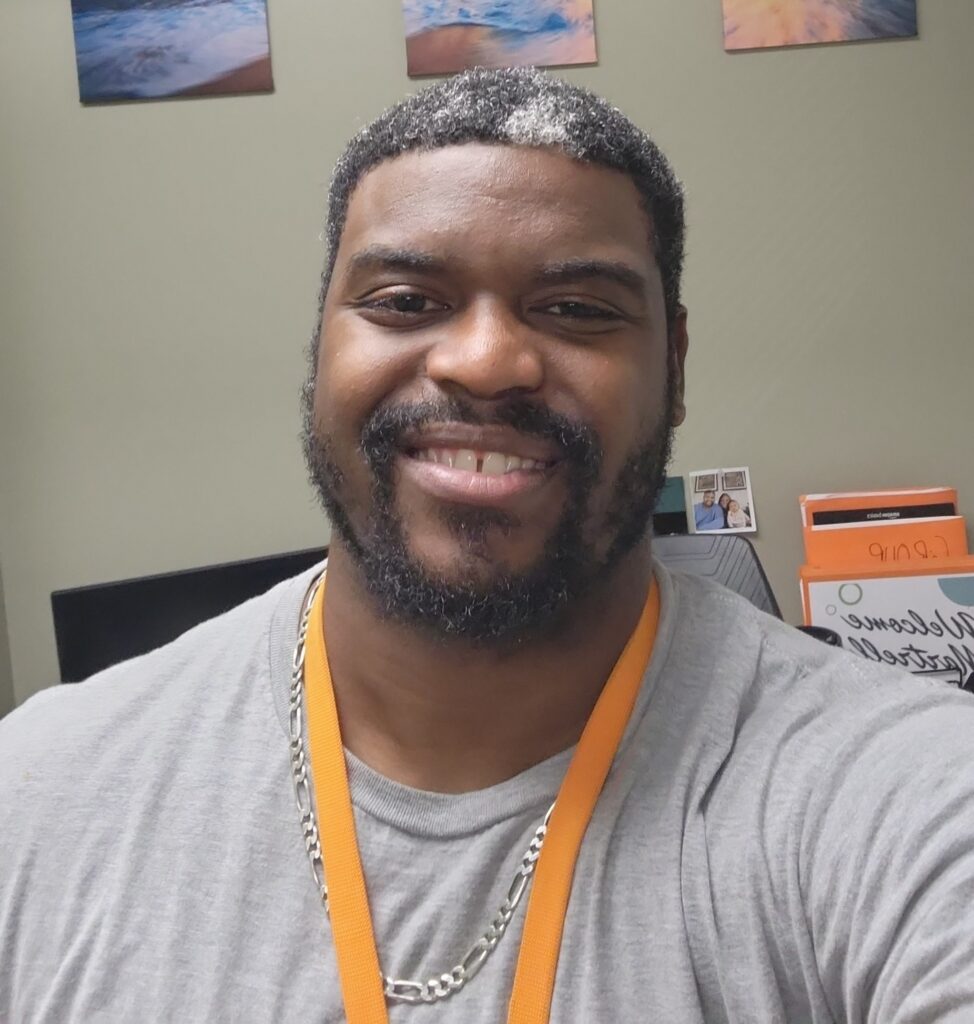
Culturally specific care acknowledges the best form of support with consideration to cultural norms and backgrounds. The Bridge is a culturally safe, welcoming, and healing space. Our staff is here to support youth from all backgrounds with an open mind.
Common challenges I’ve seen for BIPOC youth trying to address their mental health include familial barriers, lack of experience talking about their health, and trust issues.
Ways we overcome these roadblocks are rooted in community. At The Bridge, our support groups such as the Young Fathers Group are one way we break down barriers and build trust. Staff like me walk alongside youth on their journey to wellness.
By talking openly about mental health, we’re able to break stigmas for BIPOC youth.
In my experience supporting youth at The Bridge, something that has stood out is the “lightning bolt moment”. That is when I see youth gain clarity and understanding that they are supported and valued. There is an overwhelming sense of joy when they feel affirmed.
The growth moments with these young people have been the most meaningful part of my role at The Bridge. It’s not just meaningful to me, but to the youth and their whole family.
An Anonymous Youth In Shelter

It’s important to break the stigma around BIPOC mental health. Assumptions lead to complications and broken trust. Breaking trust is not good for anyone’s mental health.
A roadblock I’ve faced has been stereotypes. As a Black man, people say that it looks weak to show emotions. Too often, people have viewed being sad or depressed as an excuse. Not enough people in my life have validated my feelings or experiences.
This started to change for me, though, when I came to The Bridge. Working with Martrell has helped me get to a better place. I’ve become more aware of my emotions, have learned to manage feelings of anger, and am learning how to do better.
Culturally specific care helps because I am being seen as a whole person. My background, how I was raised, and where I come from are all considered. Being related to and understood has been very positive for me.
The Bridge has been a safe and healing space for me to get my needs met. I can openly talk about my feelings here and address my mental health in new ways.
Addressing my mental health is important to me because having that safe space and opportunity to talk about what’s going on with you actually helps. Getting things off your chest and mind actually does justice.
Jania, Youth Social Media Committee Member
A challenge I’ve faced in addressing my mental health is being judged simply for seeing a therapist. There is a cultural misconception that if others can’t see the problem, then it doesn’t exist.
Knowing that people who look like me have historically been excluded from getting the help they need is hard. Having someone who understands that struggle and the stigmas around mental health helps significantly.
The Bridge for Youth has created a safe space for me to be open about my struggles. Being able to connect and talk with others about mental health creates a community I never had before. Receiving culturally specific care helps because you have someone with a similar background who can better relate to you.
Breaking the barrier of not being judged by simply having a therapist will encourage more people to get help. Being able to lift each other up in community is so essential.
Will, Youth Social Media Committee Member
I’ve always struggled with my mental health even as a young child, but I didn’t have the courage to start therapy until I was 18 years old.
Both my parents were pretty ignorant when it came to mental health struggles despite them experiencing it themselves. This was due to them being ‘old school’. But there was an extra layer to it for my dad.
As a Black man, there was more stigma surrounding him seeking help for his mental health or even admitting that he was struggling with it. And of course, it was the same for his parents.
Society too often frames Black people struggling with mental health issues as “dangerous.” This incredibly harmful viewpoint ends up limiting the safe treatment options for black folk who need it.
Addressing mental health within ALL communities, especially marginalized ones, is crucial in ending the stigma and generational trauma.
And for a society to be healthy and united. How can a society thrive if a community is not only struggling but also being forced to do so quietly?