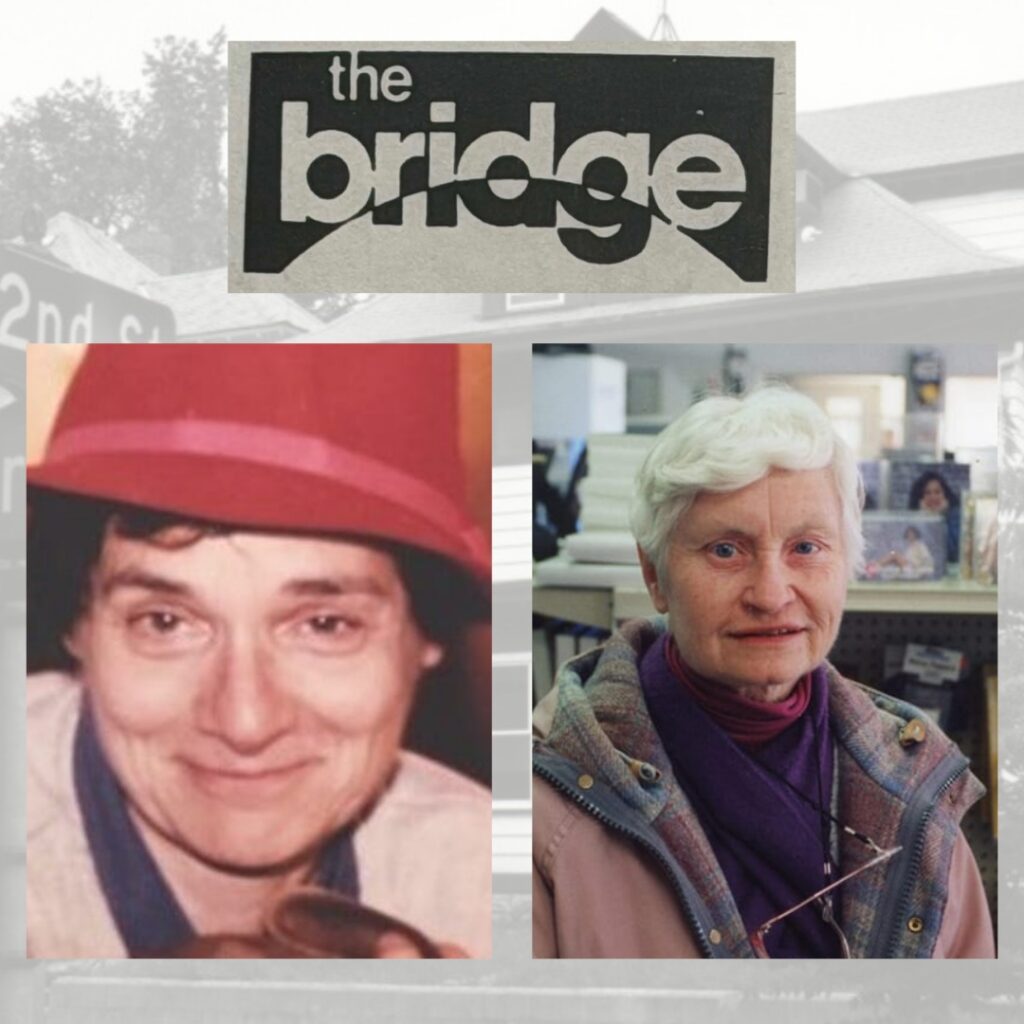
Established on the West Bank in 1970 by local activists, Sister Rita Steinhagen and Sister Marlene Barghini of The Sisters of St. Joseph of Carondelet, The Bridge for Youth has been a consistent and stable leader in supporting youth in crisis. Founded through the vision and leadership of these fierce advocates, today The Bridge is an independent, non-religious organization serving youth of all backgrounds.
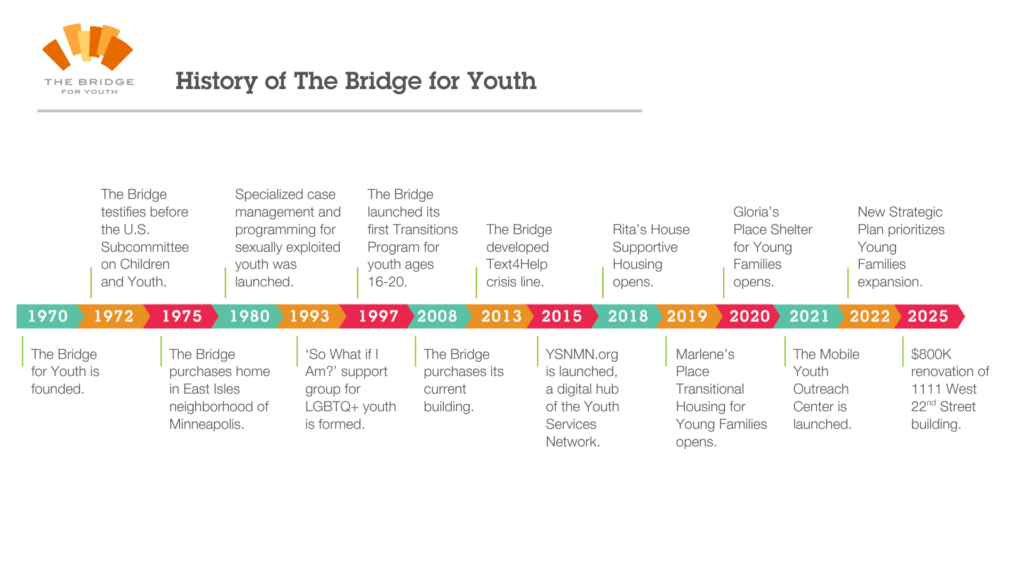
What began as a thoughtful and meaningful response to the growing number of unaccompanied youth facing exploitation, addiction, and mental illness on the streets of Minneapolis has grown into a community staple for youth experiencing homelessness.
In 1972, The Bridge established itself as a national leader by testifying before the U.S. Subcommittee on Children and Youth on the importance of crisis hotlines, a system that remains integral to The Bridge and peer organizations.
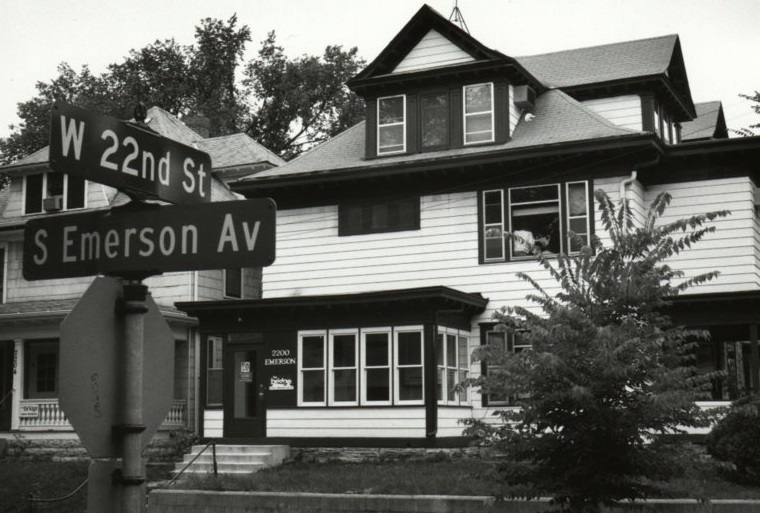
Planting roots in Minneapolis’ East Isles neighborhood in 1975, The Bridge would see several expansions throughout its history. What began with 12 emergency shelter beds would grow into a full continuum of care, including outreach and supportive services, emergency shelter, transitional housing, and aftercare supports.
1980 brought The Bridge into its tenth year of serving the Minneapolis community and was the year that launched specialized case management and programming for sexually exploited youth. The Bridge relies heavily on community support at this time, with over 50 volunteers working alongside staff to provide administrative support, family counseling, and direct service in emergency shelter.
As new needs were identified, The Bridge continued to find new ways to support youth. In 1993, The Bridge formed ‘So What If I Am?’, the first support group in the state for LGBTQ+ identifying youth. LGBTQ+ youth would come from across the metro weekly to meet with their peers and find acceptance. ‘So What If I Am?’ still meets weekly, and BFY has since further evolved to provide specialized programming and case management for LGBTQ+ youth.
In 1997, The Bridge launched its first Transitions Program for youth ages 16-20 experiencing homelessness. This was one of the first programs of its kind in the nation, and one that helped young people reach new goals by expanding programming beyond immediate shelter and case management and introducing life skills education.
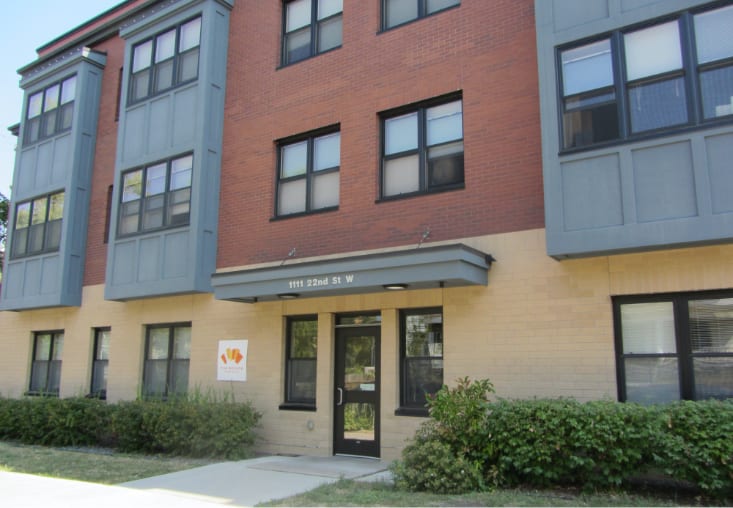
Through a $7.6 million capital campaign in 2008, The Bridge purchased its current building. This doubled capacity for residential programming and provided program space for on-site medical care, tutoring, work readiness, life skills training, and youth empowerment activities.
The Bridge continued to address unmet gaps in the continuum of youth homelessness throughout the 2010s. First, in 2013, The Bridge developed Text4Help, the Twin Cities’ first 24-hour crisis text line for youth. In 2015, The Bridge expanded upon this by launching YSNMN.org, a digital hub of the Youth Services Network (YSN), with real-time information and availability on shelter beds and services across the state. This service transformed the ways organizations across Minnesota receive and respond to the needs of youth in crisis.
2018 saw the opening of Rita’s House, offering affordable rental housing in an innovative, intentional living community for youth ages 18-21 experiencing homelessness.
In 2019, The Bridge evolved our Transitions Program into Marlene’s Place. This was, and still is, Hennepin County’s first and only site-based living program specifically for pregnant and parenting youth ages 16-20 experiencing homelessness, and their children ages 0-3. In 2020, The Bridge expanded programming for this population with the opening of Gloria’s Place, the only emergency shelter in Minnesota for unaccompanied, minor-aged youth experiencing homelessness with their children.
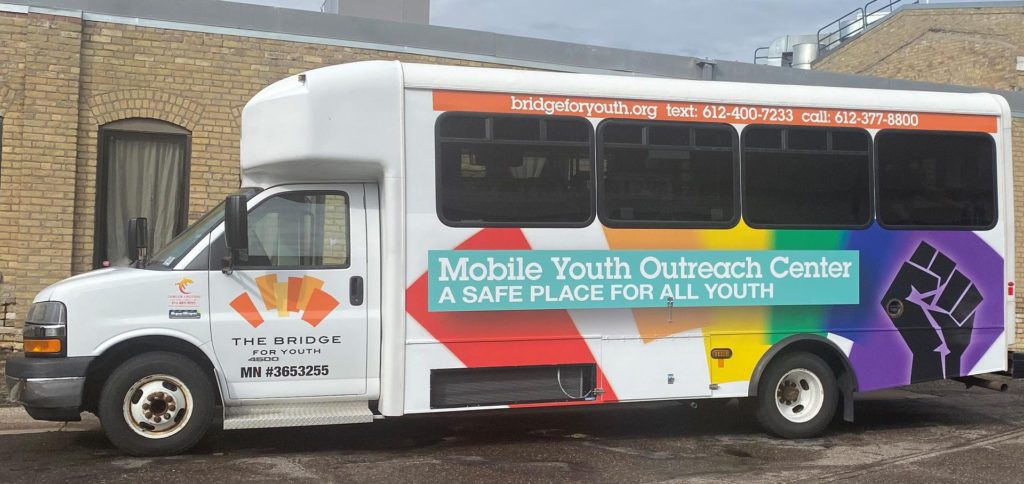
In 2021 – in response to the COVID-19 pandemic and thanks to the guidance of the Youth Advisory board, The Bridge established the Mobile Youth Outreach Center (MYOC). The MYOC brings services directly to youth in spaces and places they feel safe, providing mobile intervention to meet immediate basic needs – healthy food, gender affirming clothing, resources for safety planning, assessments and referrals, case management, and most importantly, connection through both 1:1 in-person and virtual support.
Currently, The Bridge has been taking steps in continued growth through the addition of a new Young Fathers Support Group, an emerging Youth Leadership Initiative, and plans to expand the Young Families Program.
The Bridge flourishes today thanks to a strong community of support. For over 56 years, The Bridge has been a place where ALL youth can feel safe, accepted, and supported, and will continue to be so for years to come.